• Skip to primary navigation
  • Skip to main content
  • Skip to footer
Building Energy Equity & Power

Building Energy Equity & Power

  • About
    • Who we are
    • Energy Justice Principles
    • History
    • Our MOU
  • What We Do
    • Our Strategy
    • Statewide Work
    • Regional Work
    • Local Work
  • Media + Resources
    • Updates
    • BEEP in the Media
    • Publications
  • Contact
  • Donate

BEEP Coalition

UC Berkeley Report on BEEP Recommendations Released! Workshop July 16th

July 10, 2026 by BEEP Coalition

In response to BEEP’s Preliminary Report in 2022, the California Air Resources Board contracted with researchers at UC Berkeley to investigate our concerns and develop policy recommendations. UC Berkeley’s final report has now been posted online!

BEEP members were excited to participate in this project as part of the participatory action research team. The findings and recommendations from this report reflect our experiences on the ground. CARB will be hosting the UC Berkeley research team for a virtual briefing on July 16th – the public is encouraged to attend and provide feedback!

The final report makes the following recommendations:

System Level

  • Coordinate across agencies. Form an inter-agency working group to align program design, implementation, and evaluation across state agencies and local representatives, and to report on progress toward climate, energy, and equity goals.
  • Build cross-sector partnerships. Align funding across energy, housing, and healthcare partners so the combined health, safety, and electrification work needed in the worst housing conditions can be financed together.
  • Fund CBOs as strategic partners. Engage community-based organizations as fully compensated partners across program design, implementation, and evaluation.

Program Design

  • Fund retrofit needs in priority communities. Allocate flexible funding for health, safety, and electrical upgrades as a fundamental prerequisite to electrification.
  • Enable incentive stacking. Coordinate measures and eligibility criteria across energy, health, and housing programs so households can layer support efficiently.
  • Match incentives to need. Rely on no-cost direct-install programs for low-income households and expand inclusive utility investment or green financing for moderate-income households.
  • Protect energy affordability. Scope programs to reach bill neutrality or savings and help participants enroll in bill-assistance programs and rate plans suited to their needs.
  • Invest in participant support and renter protections. Provide support across learning, capacity, and post-installation education—scaling proven California models such as the energy navigator and local resource centers—and adopt enforceable tenant protections in all programs affecting renters.
  • Tailor to ownership structure. Design targeted programs for HOAs, affordable housing, multifamily buildings, and manufactured home parks, addressing split incentives and ensuring solar and storage benefits are distributed equitably across all units rather than a single meter or owner

Program Implementation

  • Align energy infrastructure with retrofits. Coordinate electrical panel and grid-capacity upgrades with decarbonization projects so homes have the technical capacity to electrify.
  • Invest in workforce development. Standardize decarbonization certifications, fund highroad training partnerships, and support small contractors with capital access and simplified reporting to help them enter the market.
  • Equip local governments. Provide building departments with training and standardized guidelines for new technologies to expedite and standardize permitting.
  • Use place-based approaches. Apply geographic clustering or zonal decarbonization to coordinate building retrofits, grid upgrades, and gas decommissioning at the neighborhood scale.

Program Evaluation

  • Refine benefit-cost analysis. Incorporate health, comfort, and safety non-energy benefits into the Societal Cost Test (SCT) and Total Resource Cost (TRC) Test to reflect the full value of programs serving priority populations.
  • Embed distributional equity analysis. Require programs to report participation, drop-off rates, and funds distributed by income, race, tenure, housing type, and geography.
  • Standardize equity metrics. Collect granular, participant-level data on race, income, tenure, and housing type across all programs rather than relying on neighborhood proxies.
  • Measure energy insecurity. Use standardized pre- and post-retrofit surveys built on the project’s Energy Security Score to verify that programs improve the physical, economic, and coping dimensions of household energy security.

Click here to read the full report.

California’s Equitable Building Decarbonization Program Launches: Full Circle Moment for Environmental Justice Communities & Advocates

April 9, 2026 by BEEP Coalition

We’re excited to share that after two years of working with the California Energy Commission (CEC) the Equitable Building Decarbonization (EBD) program is officially launched across the state!

The Building Energy Equity and Power (BEEP) coalition, a statewide coalition advancing equitable building decarbonization policies, has advocated for the creation of the CEC Equitable Building Decarbonization program. The EBD Direct Install program is the first of its kind to provide whole-home electrification retrofits, prioritizing low-income communities. The program reduces greenhouse gas emissions while delivering critical health co-benefits by removing harmful air pollutants from gas appliances. This program reflects what is possible when community-based organizations and state agencies work together to design solutions that meet real needs.

In 2022, the BEEP coalition spoke directly with community members across California to understand their top priorities for building decarbonization and pollution inside their homes. From these conversations, BEEP developed its preliminary and healthy homes approach to equitably decarbonize residential homes. The preliminary report underscores the need for equitable building decarbonization to cover whole-home and safety retrofits, provide upfront costs for low-income communities (like a direct-install program), and include measures to prevent renter displacement.

Then, in 2023, the coalition supported the creation of the EBD program by aiding the CEC in co-hosting workshops with advocates and environmental justice leaders across California to further ground truth communities’ input. This was done through a co-design process where the CEC EBD staff moved away from only informing communities and shifted towards a meaningful collaboration. At the end of the year, the CEC adopted the Equitable Building Decarbonization Program guidelines championed by advocates and environmental justice leaders. The co-design process further created trust between the CEC and advocates ensuring environmental justice communities were not going to be excluded from the program.

Since the adoption of the guidelines in 2023, BEEP and multiple coalitions have rallied together to protect the program. As of early 2026, the California budget deficit has caused the program to be cut from $922M to $432M. The impact of the cuts slow California in reaching its climate goals, but also limit the energy, health, and climate benefits to environmental justice communities. Protecting the program is crucial to ensure long overdue investments are delivered to environmental justice communities.

Communities that have been left out of the just transition now have a pathway forward to healthy homes. The CEC Equitable Building Decarbonization Program is a historic win and a full circle moment for many. However, there is still work to be done to equitable decarbonize all of California. The BEEP coalition will continue to work with allies to secure sustainable funding for the program, support allies advocating for statewide tenant protections, and to ensure that building decarbonization regulations support environmental justice and low-income communities.

The program will be administered by three implementers across the state: 1) Northern California, 2) Central California, and 3) Southern California. Each region will focus on specific communities in the first phase. Folks who are eligible will be able to get a home energy assessment and have the opportunity to fuel switch eligible gas appliances such as gas water heaters and gas stoves with energy efficient electric appliances.

To learn more about efforts in your specific region please connect with:

  • Christine Selig (PODER) – Northern California Region
    • healthyhomes@podersf.org 
  • Luzita Lutfi (Center for Sustainable Energy) – Central California region 
    • luzita.lutfi@energycenter.org
  • Karen Romero Estrada (PSR-LA) – Southern California region
    • kromero@psr-la.org

A Milestone for Healthy, Resilient Homes in San Francisco

March 4, 2026 by BEEP Coalition

Photo by Demondre Ward

On January 28, we gathered at 2688 Bryant Street to mark a major step forward for our Healthy Resilient Homes initiative. Community members, neighbors, and elected leaders—including Supervisor Jackie Fielder—came together to celebrate the completion of Phase 1 of the demonstration project at our member Amparo’s home. A whole-home electrification retrofit that replaces gas appliances with clean, safe alternatives at no cost to tenants or the building owner.

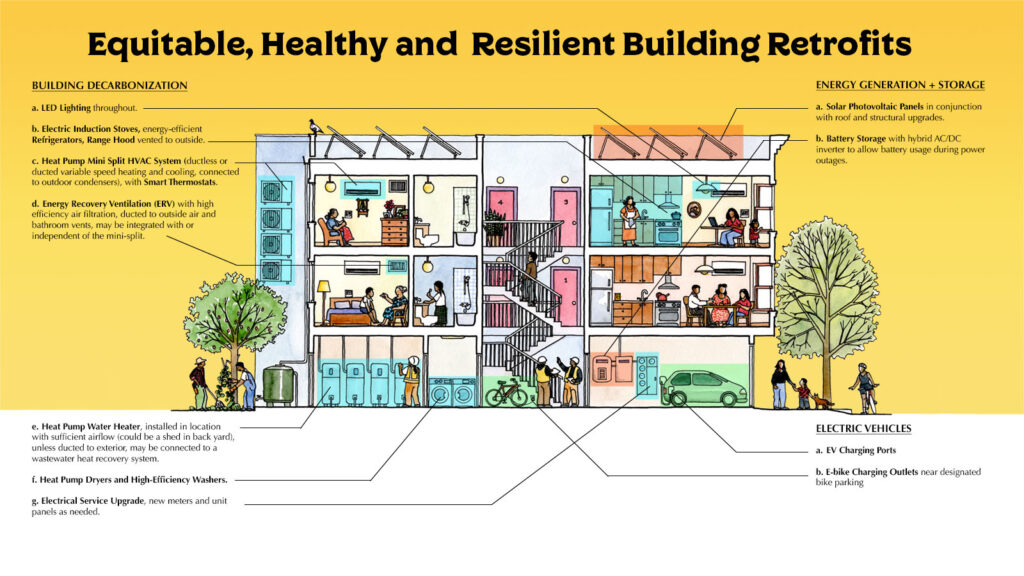
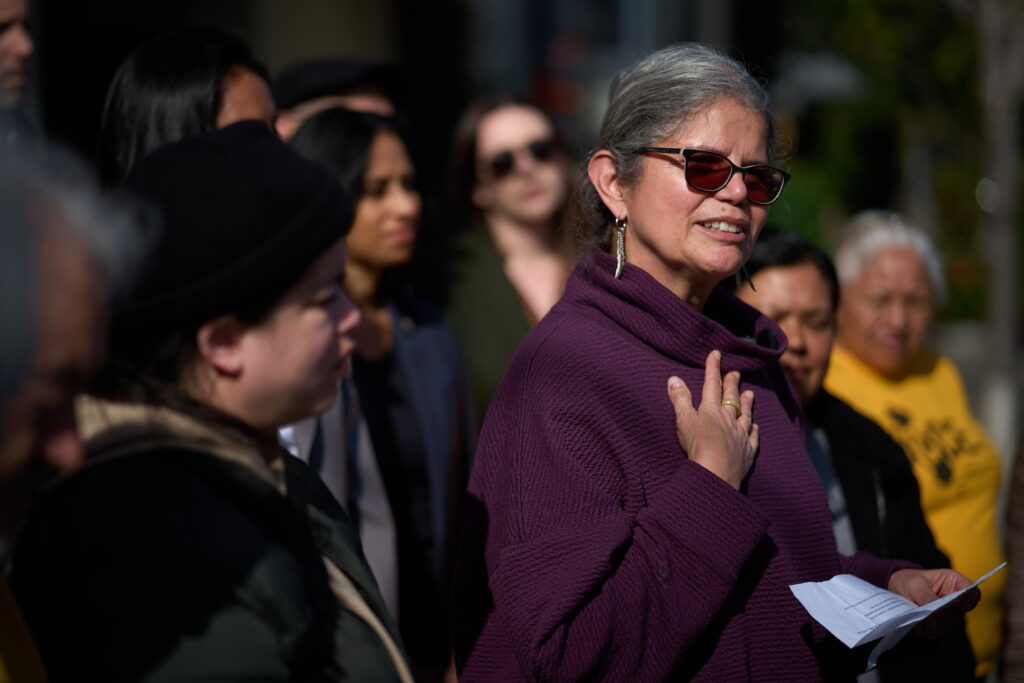
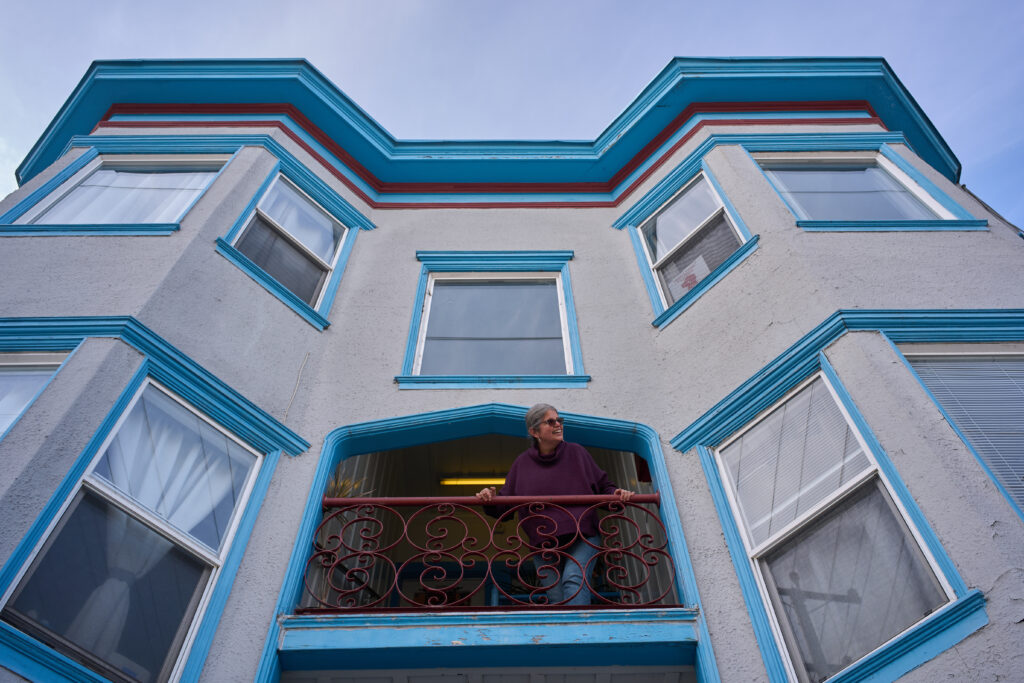
Amparo Vigil stood at the center of the celebration. A lifelong Mission District resident and PODER member, she opened her family’s four-unit building—purchased by her father in the 1980s—to serve as a demonstration project. For decades, Amparo has rented below market rate to Latinx families, honoring her father’s commitment to keeping the neighborhood strong. Now, her building features induction stoves, heat pump HVAC systems, upgraded electrical panels, and electric heat pump water heaters—creating increased energy efficiency, healthier air, protection from extreme heat, and greater climate resilience for everyone who calls this place home.

Photo by Demondre Ward

Antonio Díaz, PODER’s Organizational Director, opened the press conference by thanking partners and highlighting what this project proves: electrification can center working Latinx families, not displace them. Gas appliances burden households with volatile energy bills and indoor air pollution linked to asthma and respiratory illness. By removing these hazards while protecting working-class tenants and keeping rents stable, we’re showing that climate action and housing justice must go hand in hand—especially in historically redlined neighborhoods like the Mission.

Cyndy Comerford from the San Francisco Environment Department spoke next, affirming the city’s commitment to equitable building decarbonization and the partnership that made this project possible. Then, Supervisor Jackie Fielder took the mic, celebrating the work while calling for the Mission District to be included in SB 1221’s neighborhood-scale decarbonization zones—a resolution she recently championed that passed unanimously at the Board of Supervisors.

Photo by Demondre Ward

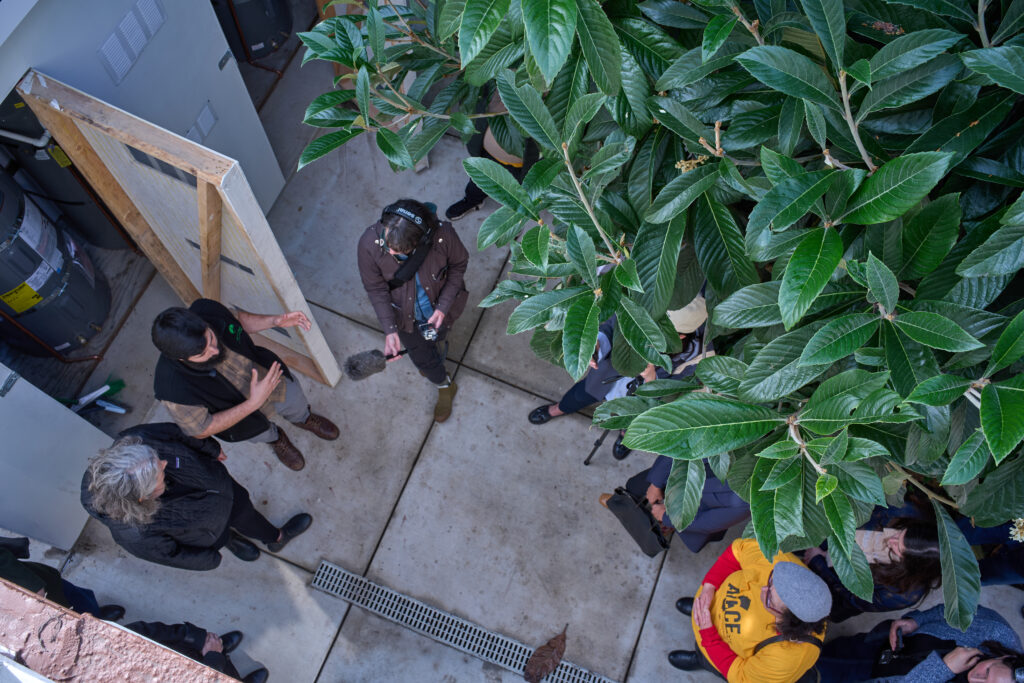
Following the speeches, we led a tour through the building. We started at the front steps, sharing the history of Amparo’s family and their deep roots in the Mission. Inside the garage, we showed the upgraded main service panel. In the hallway, we pointed to the new subpanels and meter upgrades. Out back, we gathered around the electric water heaters and condensers on the porch. Upstairs in Amparo’s apartment, people marveled at the mini-split heat pumps and induction stoves—touching the smooth cooktops, asking questions about utility bills, and imagining what this could mean for their own homes. Amparo spoke about what a great feeling of relief and joy she experienced the moment she watched the plumber turn off the gas to her home and finally creating an all-electric building.

The work isn’t finished. Phase 2—insulation, roof repair, solar panels, and battery storage—awaits additional funding. But what we’ve built here is already a model. Lessons from Bryant Street are shaping state policy through the Equitable Building Decarbonization program and informing advocacy for SB 1221 to designate the Mission District as a priority for a neighborhood-scale decarbonization pilot project.

Latinx working families want to be part of the solution to climate change—not left as afterthoughts. This project shows us what’s possible when everyday people lead, when trusted organizations with longstanding community relationships steward resources with care, and when public funding flows directly to those most impacted by structural disinvestment and climate chaos.

Photo by Demondre Ward

BEEP Program Spotlight on Emerald Cities Collaborative’s E-Contractor Academy

December 19, 2025 by BEEP Coalition

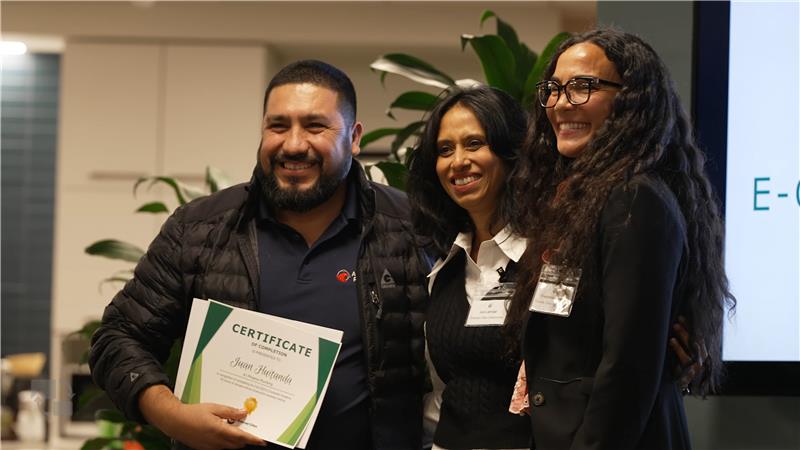
BEEP member Emerald Cities Collaborative Northern California (ECC) focuses on frontline contractors as essential and principal workforce and community stakeholders in equitable building decarbonization. ECC is an industry leader in decarb and energy efficiency training for frontline contractors. This Fall ECC enrolled 21 participants, all representing decarbonization-related trades, and graduated their 6th fully in-person E-Contractor Academy, in a fifth Bay Area County, East Contra Costa. ECC partnered with PG&E, UA Local 342 and MCE to host this cohort. ECC connected E-Contractor graduates with 7+ project pipelines, including decarbonization opportunities in the residential and commercial sectors generated by policy and market transformation demand drivers.

The E-Contractor Program – a robust ECC program since 2013, partners with small frontline contracting firms to build technical, operational and financial capacity for successful bidding and completion of decarbonization and public construction projects. Contractors also work closely with ECC to inform on design and implementation of energy programs that ensure workforce equity. E-Contractor is offered at no cost to contractors thanks to ECC partners.

The program yields the following outcomes:

  • Ensures lowered barriers and increases access for frontline contractors to high quality decarb training from technical subject matter experts
  • Healthy businesses and business development models that support generational wealth building in frontline and EJ communities through extensive capacity building training modules and support
  • Meeting frontline contractors where they are and centering their community-relevant business objectives and needs through reliable, long term one-one-one support
  • Supporting EJ community residential engagement and hiring on direct install and other decarb construction projects by training and supporting community-based hyperlocal contractors who are trusted and informed community conduits
  • Leadership on high road contractor development which necessarily centers and supports leadership of small contracting firms from environmental justice and frontline communities

In 2022, BEEP published our preliminary report which outlined key recommendations, one of which is to ensure job access for local and priority populations underrepresented in high-road construction. As such, we underscore the importance of decarb training programs that amplify insight from and center these communities. As BEEP assembles its updates and insights gathered from our building decarbonization focused activities over the last few years, we continue to uplift the voices of contractors tasked with implementing crucial retrofits in our communities.  

BEEP and ECC thank all this fall’s E-Contractor graduates for the important community-led decarb construction work they do!

This year’s graduates included:

  • A1 Phoenix Plumbing
  • GAP Electric Inc
  • JJP Electric
  • KR Sustainable Structures
  • Nisus Construction
  • RAM Electric Services Inc
  • Sol Benefit
  • Volt Peak Inc
  • We Can Do It Plumbing

BEEP Advocates for Low-Cost, Easy Install Induction Stoves

November 7, 2025 by BEEP Coalition

The California Public Utilities Commission held a hearing on October 9, 2025 with deep implications for equitable building decarbonization.

The California Market Transformation Administrator (CalMTA) filed an application with the CPUC for approval of funding to bring two new technologies to market: 120v window heat pumps and 120v induction stoves (including models for smaller kitchen spaces). Despite a proposed decision from the Administrative Law Judge to approve the application, an alternative proposed decision from Commissioner Matt Baker would deny funding for the 120v induction stoves.

BEEP members joined the hearing to provide testimony about how critical investments in low-cost, low watt induction stoves would be for the communities we serve. These stoves would enable residents to electrify without having to upgrade their outlets – which would reduce costs and remove barriers to cleaner air in their homes.

Click here to see a recap of the full hearing posted by CalMTA – including quotes from BEEP members!

The California Environmental Justice Alliance whose ranks include BEEP members CRPE, CBE, LCJA, PSR-LA, and PODER, has been a key advocate in this proceeding. Read some of CEJA’s advocacy HERE and HERE.

Join Us for a Statewide Virtual Listening Session, October 15th

October 5, 2025 by BEEP Coalition

On October 15, 2025 from 5:30-7:30pm the BEEP Coalition will host a statewide virtual listening session. We welcome renters, homeowners, contractors, developers, and community members to share opportunities and challenges with whole-home retrofits.

This listening session is the final session in our second round of listening sessions across the state, which will culminate in a new report from the BEEP Coalition – don’t miss out!

Click here to register.

  • Page 1
  • Page 2
  • Go to Next Page »

Footer

Sign up for Updates!

CONTACT US

Copyright © 2026